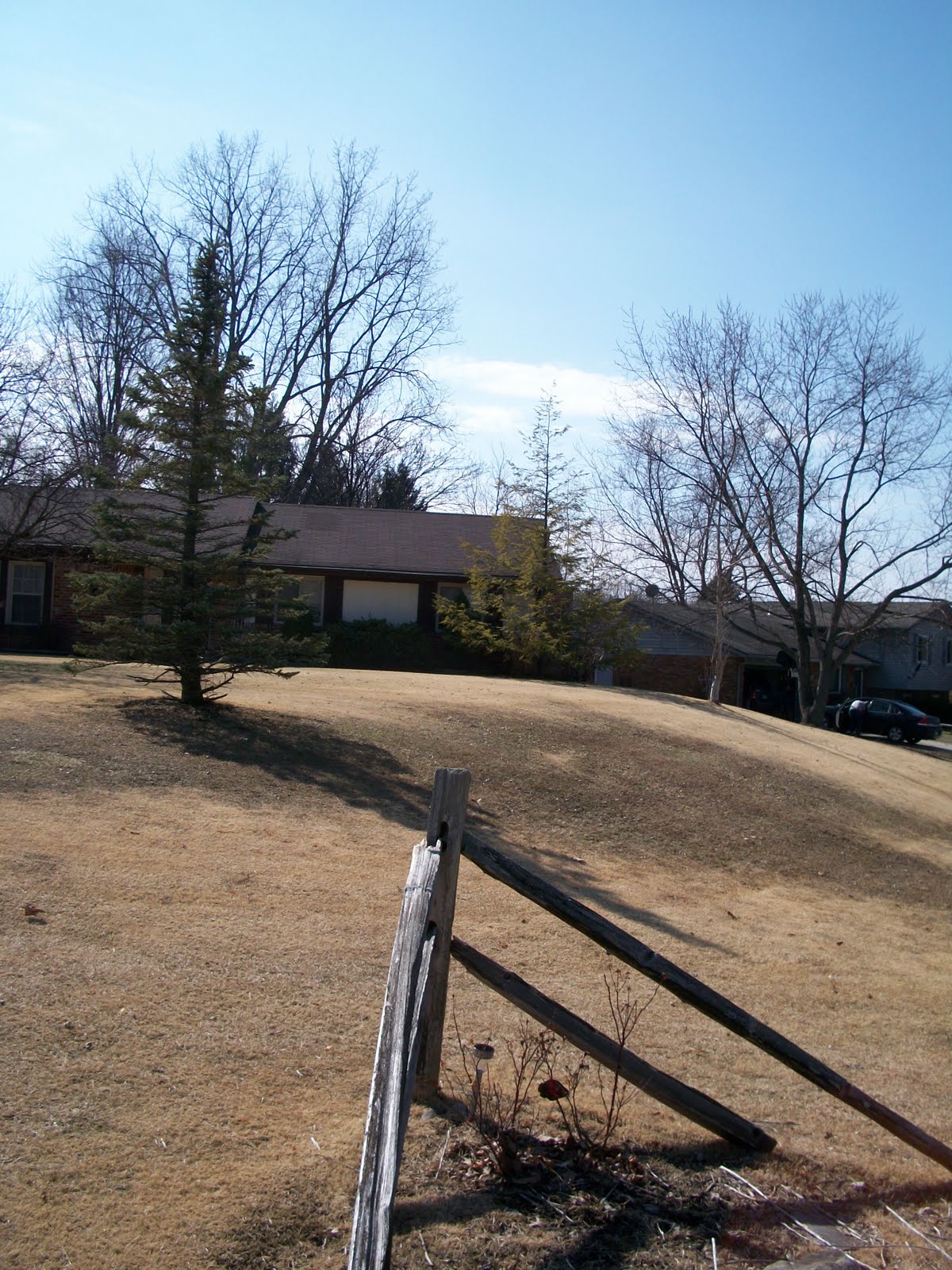
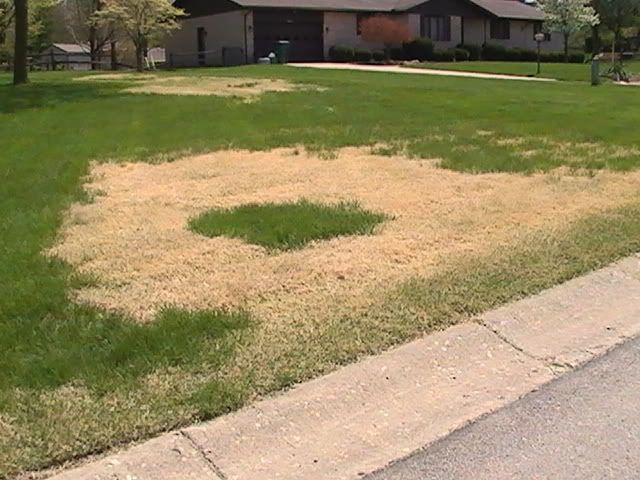
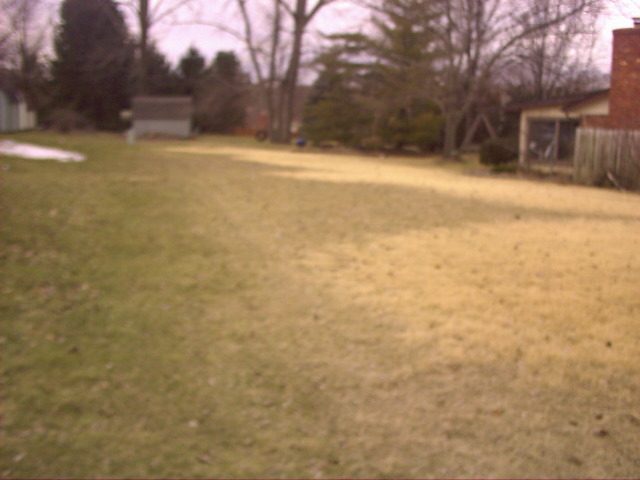
Here you can see the Zoysia spider on target to take over this corner of the driveway.
Here you see the crabapple tree is surrounded and we are just waiting for the thickness to come!
We Love Our ZOYSIA GRASSES If You Love Your Zoysia, This Is The Blog Just For You


Here you can see the Zoysia spider on target to take over this corner of the driveway.
St. Patrick's Day is a Day of Green
A Day of Celebration for Zoysia Green
A family of grasses native to many parts of the Orient, Zoysias were first introduced to the
In description, any of several strains of Zoysia sound like excellent all around lawn grasses. They grow slowly and close to the ground, thrive on a wide range of soils, have good shade tolerance, and produce such dense turf that weed invasion is resisted.
In past years Meyer and Emerald and some strains of Matrella have been the
most widely known and available Zoysias used in this country. They must be
propagated vegetatively and rooting and growth is slow. Solid sodding is
recommended, as is an underground irrigation system.
Zoysias grow slowly and require infrequent mowing, but they are so dense
that a good sharp mower with adequate power should be used and cutting
should be on a regular schedule. If "scalped" in mowing and subjected to other
unfavorable treatment, Zoysias are slow to recover.
Zenith Zoysia is the result of over 50 years of research searching for a Zoysia with good texture and turf quality that could be propagated from seed. Zenith is in the Japonica family as is Meyer and is similar to Meyer in texture and color. Planted shallow on a newly prepared seedbed and watered frequently. For Southern recommedations Zenith germinates readily producing a stand of seedlings in 10 to 14 days. Like all Zoysias, it grows and spreads slowly and therefore seeding rates of one to three pounds per thousand square feet are recommended.
This dense growing plant until recently was only available for propagation as sod or the ever present plug - often seen in the Sunday Parade magazine. With the development of Zenith, the same quality or better than the standards of the last 50 years can be planted from seed.
Zoysiagrasses are the best adapted selection for the transition zone of the US running along a line from Baltimore to Cincinnati to St. Louis and West. To Infinity and Beyond
Zoysia is a genus of eight species of creeping grasses native to southeastern and eastern Asia (north to China and Japan) and Australasia. These species, commonly called Zoysia or Zoysiagrass or even Zoysialovers.com , are found in coastal areas or grasslands. The genus is named after the Austrian botanist Karl von Zois. Here is the biological breakdown from Kingdom to Genus
| Kingdom: | Plantae |
| Division: | Magnoliophyta |
| Class: | Liliopsida |
| Order: | Poales |
| Family: | Poaceae |
| Genus: | Zoysia Wild. |
This genus was first introduced to the United Sates in the early 1900's
Those eight species were:
1. Zoysia japonica
2. Zoysia macrantha
3. Zoysia macrostachya
4. Zoysia Natrella (syn. Z. tenuifolia)
5. Zoysia minima
6. Zoysia pauciflora
7. Zoysia pungens
8. Zoysia seslerioides
9. Zoysia sinica
The 2002 National Zoysiagrass test has 20 entries that they are evaluating and I have seen reports of at least one that has been in use for at least 10 years and is not included in this testing. (That being BK-7) Having 20 entries does not mean that you can choose amongst the 20 for your yard or greens, just currently 8 of these listed are available for commercial use. The really great news for Zoysialovers.com is that these fine growers and suppliers are working diligently to bring all of us the very best and most profitable Zoysia to market.
Those 8 varieties, that are commercially available are: Meyer, Emerald, Himeno, Zenith, Compadre (Companion), GN-Z, Zorro, and Chinese.
I regret to inform you that this "National Test" lacks the Great State of Ohio and Indiana that would make the people in some states like Ohio and Indiana benefit from the fullness of all their massive research.If Zoysia's not growing- Then You're not mowing.
Have you ever considered all the advantages of Zoysia grass Lite brown that dormant color that lets you know that the Zoysia growing season is over. What a mixed blessing, at that time it tells you just how much the Z has taken over the area then you start to realize that the Z has gone dormant and that is sad. One year I knew a frost was coming so I spread sheets out over the area to keep it warmer, the weather man had predicted that the frost was going to be heavy the weather was going to turn to Indian summer almost immediately. Which it did and I got a whole 3 days of extra growing season. Best laid plans of mice and men so they say. I had considered using smokers like they do for the fruit trees in FL and CA, I just could not justify the cost for an extra three days besides I may have had to mow an extra time.
Then when Zoysia is tan I am not mowing, lots of leaves to deal with but growing grass is not a concern. If it's not growing you're not mowing! When it is growing you're not mowing as much. One of my life's passion is to have my entire yard covered with Zoysia by the time I turn 55. Thereby, reducing the number of times the grass needs mowing down to once a month, in Ohio that would be once in late May late June late July early Sept late Oct that looks like five (5) mows to me so the going rate to cut half an acre in this area is about $35 a cut or $175 for 5 cuts now the guy next door with out Zoysia cuts twice in April, August, November and then four times in May, June, July, September, October, for 22 times at $35 or $770. Looks like I have an extra 595 greenbacks in my pocket.